


.png)
Tree Mule
- FCNRCD

- Jun 22
- 4 min read
2026 Tree Planting and Sale Intern Reflection by Bryan Dougherty
Some people (myself) call me the “tree mule.” As a tree mule, you are tasked with spending most of your 40 hour weeks digging in the mud, planting trees. To some, this may seem like a dirty, strenuous, and tiring job. Those people would be right, and that’s exactly what I love about it.
My name is Bryan Dougherty and I have been working with the Franklin County NRCD this Spring as a Tree Planting and Sales Intern. After graduating from Colorado State University with a degree in Natural Resources Management, I felt a calling to engage in physically demanding work. As a young lad, I want to challenge my body’s strength and stamina. On top of that, I deeply care about the wellbeing of Earth, and I want to do hands-on work that is supportive of healthy ecosystems. Fortunately, this tree mule position was just what I was looking for.

It may seem like this label has a negative connotation, but I think “tree mule” is a proud badge to wear. A mule is a strong, respectable animal that does heavy lifting. In this position, I was able to do some heavy lifting by helping plant around 4,500 Vermont native trees and live stakes in riparian areas across Franklin County. I truly enjoyed slugging on the muck boots, trekking out to a new corner of the county each day, and attempting to give these trees a good life in their new home.
It’s such a gift to be outside every day, working with the land. I love hearing the birds sing, finding new plants, exploring beaver dams, trying to jump over streams, falling into streams, and laughing at each other falling into streams. On my first planting day ever, we were walking across a flooded corn field when my coworker Maria stepped right into a belly-deep stream. We helped her out and made sure she was okay, then had a good laugh. That first day was a funny one. We also started planting in an area we weren’t supposed to plant and had to pull the trees out and relocate. The silly joys of human mistakes.

Since Franklin County is largely agricultural land, these plantings are especially important in this area. Industrial agriculture can increase soil erosion and nutrient runoff while decreasing wildlife habitat and water quality. When the roots of these baby trees establish and start to grow, we should see improvements in soil stability, higher nutrient-absorbing capacity, cleaner water, and more habitat for wildlife. It’s rewarding to be a part of this essential work.
Another project I was fortunate enough to work on was the Food Forest at Hard’ack Recreation Area. The goal of this project is to create a forest of fruit and nut-bearing trees and shrubs that are beneficial for both wildlife and the human community. I believe that creating more landscapes like this will strengthen our relationships with beings in our backyards. Although the planting was very hard work (big trees with heavy root balls), we worked together and kept it light, laughing our way to planting the final tree in the ground.
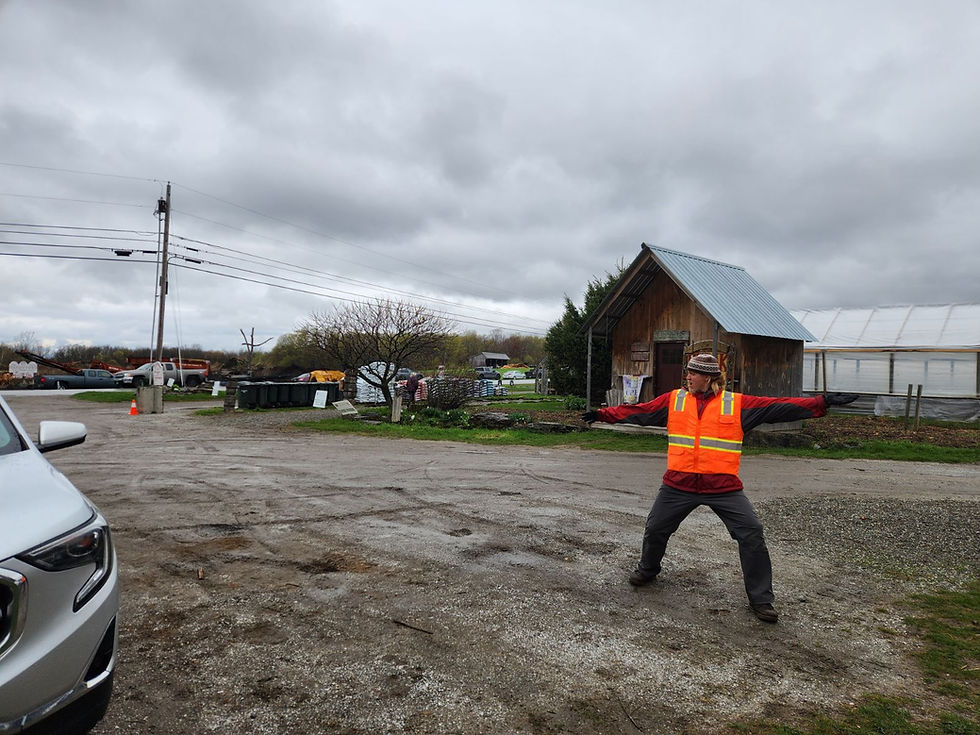
My team throughout this season was incredible. They welcomed me and answered my loads of questions about the operations of FCNRCD. They are hard-working, kind, silly yet professional, and collaborative. I am grateful to have worked alongside this crew, especially during the tree sale when we needed to be extra cohesive. The week leading up to the sale was intense as there were over 380 tree orders to pack. To get all these orders prepped, we used a giant garage to set up all the trees and tables for packing orders. Like busy bees in a hive, we buzzed about the garage for days labeling trees, tying bunches, picking them for orders, rolling their roots in newspaper, and bagging them. These were long days, but it was a rewarding job to provide trees to the community. Honestly, my favorite part of the tree sale was being a parking attendant. I had a good time using fun body movements to guide cars to open spots.
Once tree planting season was fizzling away, we jumped right into tree maintenance season. Returning to previously planted sites, I was able to see trees that were planted years ago that were alive and growing. I also witnessed trees I had planted earlier this season beginning to leaf out, which is such a blessing. To maintain trees, we weed whack a circle around them to improve sunlight exposure and decrease competition with other plants. Sometimes the surrounding vegetation is tall reed canary grass or thick raspberry bushes, which is a hassle to weed whack through. Other times it’s a few ferns or light grasses. You never know what you’ll run into out there, except you sort of do because it’s usually reed canary grass.
One thing I like about revisiting the sites is noticing which tree species are doing especially well at certain sites. At one site, most of the silky dogwoods were thriving. At another, tamaracks were on top of the world! I wonder if this has to do with soil conditions, competition, precipitation, sunlight, or the lot. Some sites even had volunteer box elders, maples, dogwoods, and willows that were exciting to see. When we do a survivorship count, we categorize their condition as dead, surviving, alive, and thriving. Most of the trees from all sites fell into the “alive” and “thriving” categories. This is a hopeful sign for the future of these streams.
My hope is that all beings appreciate the work that we have done this season. We are trying to support the very thing that all beings rely on: water. Thank you team for doing this crucial work, and for letting me do it too.
May our trees and all those who rely on them flourish for generations to come!
From the FCNRCD team: We are so appreciative of the "Tree Mule" (AKA Bryan) and all the hard work he accomplished. We wish you the best on your next adventures and hope that you continue to wear this proud badge!


I appreciate the useful maintenance advice shared throughout this post. Investing in paver restoration helps preserve outdoor walkways, patios, and driveways while restoring their original beauty without complete replacement.
I found this article both informative and easy to understand. Choosing dependable excavating services near me is a smart decision for property owners planning improvements or new construction.
Excellent advice throughout this article. Experienced professionals understand how to design and maintain outdoor areas that fit local conditions. Choosing reliable landscape contractors near me is a practical investment for keeping properties attractive and functional all year long